
Here are some books I've read recently. I don't have any (public) places where I track my reading, and I'm probably not going to share everything I read, but if I have any interesting thoughts on books, I'm going to share them here!
Cover images edited with Dithermark
Here are the books I've read before March, 2026! Due to my mediocre memory I will only review the books I have a strong opinion of here.
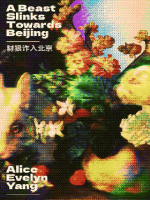
Rating: 4✶ | Date: 9 February 2026
Fav. Quote: "There will be women after this. There will be innocence after this. There will be girls who won’t know how it feels to be split by a monster crawling between your legs."
Review:
I love books that show multiple generations. A Beast Slinks Towards Beijing has such an interesting plot. It talks about the Japanese invasion of China and the Cultural Revolution and the Red Guards. It uses folklore to represent the way that trauma haunts a family.
The main character’s father comes back after he abandoned her and her mother a long time ago, and his mind no longer works how it used to (I’m not sure if it's because of dementia, or something like that, or because of his drinking). I love how Yang portrayed his relationship with his own memory. His chapters were so poignant, and the way that the narrative portrays his guilt is something I haven’t read before.
I’ve read books about the Japanese invasion of China before, and most of them touched on the aftermath. But I haven’t read a novel about the Cultural Revolution before. While I do recommend that people educate themselves, you don’t need a complex understanding of history to be able to read this book.
I can go on to sing praises for this novel, but it’s difficult to explain what occurs without spoiling it too much. The writing is beautiful, and Yang writes such a wide range of emotion wonderfully. The only real downside I have might partially be because of my own ignorance. I don’t know much about Chinese folklore, and though the book itself explains some of the metaphors, it was still difficult to follow. Me having no idea about the folklore is my own fault, I can’t force an author to dumb down their cultural book for me, but I don’t think that my confusion is entirely my own fault. It felt like Yang had so many things she wanted to tie into the narrative, that she forgot to make sure that everything had its reason within the story.
Even if I had a better understanding of Chinese folklore, I probably would have given A Beast Slinks Towards Beijing a similar rating. There are things I wished that Yang would have touched on more, and things I felt could have been left out. In the end, I didn’t feel fully satisfied with what I had read. But this novel is such a strong debut novel, I hope Yang gives us more!
Also, the covers are beautiful! Both of them! The one I used in this site is the UK one, made by Luke Bird and Cindy Luan.
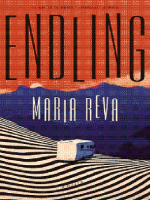
Rating: 4✶ | Date: 1 March
Fav. Quote: “The future had been a luxury. The future didn’t exist anymore.”
Review:
I wanted to read Endling long before it was even released. After I read Reva’s other story Good Citizens Need Not Fear I knew that I needed to read something else by her, but Endling hadn’t yet released. As time passed, I forgot about it, I read other stories and got interested in other plots. But Reva’s name stayed in the back of my mind. And I’m glad that I did. I hadn’t even bothered to read what Endling would be about before I finally picked it up.
Endling is about Yeva, a snail scientist who lives in a mobile lab. She goes on dates with Western men for work. At work, she meets Nastia, who also dates men, and her sister Sol, who translates for Nastia. Together, they kidnap Western men who they met at a romance tour. The plan was perfect, until Russia invades Ukraine and they have to get the men to safety while their country is at war.
This story pulled you in with one single question: will they be able to bring the men to safety without getting in trouble for kidnapping? But Endling is so much more than a story about kidnapping. It talks about culture, and how Western men view Slavic women. It also talks about immigration — a character moves to Canada when he is young, and his parents want him to succeed there. By doing this they take away key parts of their Ukrainian culture and focus on integrating into Canadian society seamlessly. And yet, the character feels like he would do better in Ukraine.
Reva herself was born in Ukraine but moved to Canada. She toys with the format of Endling, gives us a perspective on how it is for her to be away from her country while a war is going on. It’s a little confusing in the beginning, the way that she toys with narrative to integrate more of her own lived experience, but once you get into it you begin to appreciate the little details she leaves behind of her own life. Many authors use their personal experiences in their books, but not many announce it within the book itself.
The end doesn’t give a clear answer to the question stated above, but the end is still satisfying. The story isn’t finished, which makes sense to me, since the war isn’t finished either. At the end, you leave the characters to continue their journey, and you hope that nothing terrible happens along the way.
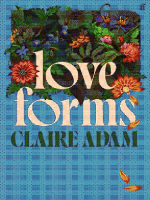
Rating: 2✶ | Date: 6 March
Fav. Quote: "But I remember it now, that for those few moments, she and I were together. The snug warmth of her body melting into my own. The softness of her head against my cheek. We had that time together. We were given that gift."
Review:
I didn’t love this book. In my opinion, you can write a story in two ways: by describing what happened, and by making the reader feel it (usually, by placing a reading into the main character’s mind and emotions). I feel that a good book needs to be able to do both of these things. Love Forms did too much of the former, and too little of the latter. Adam did a good job at making places feel alive, but I felt disconnected from the characters and their emotions. This is a story about a woman who got pregnant when she was still a girl, which made her give the baby up for adoption.
This book was made out to be a great depiction of a mother’s love for the baby that she gave up, and I think Adam could have done more to actually show us how Dawn felt. I’m not saying there wasn’t any love, but the story could have been a bit deeper.
The way this book was written reminds me of All Our Yesterdays by Natalia Ginzburg, a book I read in early February, a book I gave a similar rating as this one. Both Love Forms and All Our Yesterdays focus more on location, and on the actions that take place within a story, rather than getting the reader immersed in the character’s mind. Both books received similar ratings, so I’m not saying that this way of writing is bad, it’s just not the kind of prose I prefer to read myself.
I also believe that Adam has a habit of overexplaining things, or more accurately, repeating information. Two examples stuck out to me the most: Suzanne is Warren’s wife, and this fact is stated repeatedly. In chapter 13, she repeats Finlay’s and Oscar’s age twice in the matter of a few pages. I feel like Adam fears that we might forget details that she deems important, and instead of looking at the words she wrote, and figuring out how she could make them more memorable — or, trying to figure out if the exact details are really that important— , she just repeats them for us.
And, finally, I'm not sure what I'm supposed to make of this line in chapter 14: "He was Indian like them, but he had knowledge, and it made them uncomfortable."
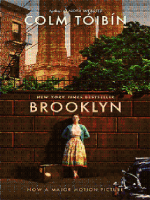
Rating: 3✶ | Date: 9 March
Fav. Quote: "She thought it was strange that the mere sensation of savouring the prospect of something could make her think for a while that it must be the prospect of home."
Review:
Brooklyn was slow, but it surprised me. For the first twenty pages or so I was convinced that I wasn’t going to like this book. It felt more like a play (not that I’m very familiar with those) than a novel. It described an action, followed by another one, followed by dialogue, followed by another action, etc.
But as I got further through the book, I warmed up to it. Not enough to give it more than 3 stars, and I’m even slightly hesitant to give it that. The plot of this book is common, a classic: a person lives in one country, then moves to another one, and they have to find their way in unfamiliar territory.
I don’t particularly enjoy this kind of story, since — once you’ve read enough of them — it’s easy to predict what is going to occur. You can forgive the nonuniqueness of these stories a little bit when they have beautiful writing that sticks with you, but many of the books I’ve read that follow this immigration storyline, including Brooklyn, don’t have that. The writing is good, but it doesn’t make up for the bland plot. There is more focus on action and location, rather than emotion. When, in my opinion, these things should lay in balance with each other. When something feels missing, I wonder if I would have been better off just reading the summary of the book, and picking up another one that promises me something more outstanding.
By unique I don’t mean that it has to be the first of its kind. People have been coming up with stories since basically the beginning of time, so it’s hard to come up with things that nobody has thought of before. This isn’t what I’m expecting. All I want is that the author offers me something that is theirs, something that is worth buying and reading. I’m not difficult to please in this aspect. When I finish a book, I just don’t want to think all of these things happened, but it led me nowhere, it led the character nowhere, why did I pick up this book?
The fact that people have been writing for so long, has made it difficult for readers. There are so many novels out there for us to read, and we can’t read all of them in our lifetimes, so we have to be picky. When I read a book about immigration, for any reason, I want the character to make decisions, I don’t just want them to go through life without any autonomy.
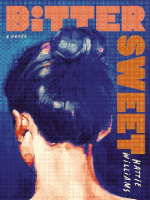
Rating: 2✶ | Date: 16 March
Fav. Quote: “For me it felt the opposite, like I was intruding in the world, always waiting to be identified as an imposter and dragged off to where I really belonged.”
Review:
I’m on edge about giving this two stars, but one star feels just a tad bit too harsh. The problem with this book is that it feels like Willaims didn’t quite care for it. There were multiple times that I had to re-read a sentence multiple times just because it was written sloppily. Sometimes it even felt like words were missing. Like in these instances:
“How he might greet my dad, to whom was so close in age.” → “to whom he was so close in age.”
“...but his celebrity meant that they felt some ownership over him,...” → “...but his celebrity status meant that they felt some ownership over him,...”
“All of the houses were quiet and their blue shutters tightly closed to keep the heat out, Ophelia explained.” → “All of the houses were quiet and their blue shutters were tightly closed to keep the heat out, Ophelia explained.”
It just felt like Williams kept forgetting to put some words in, making certain sentences unnatural at best and grammatically incorrect at worst.
The plot wasn’t really the best, either. It was quite boring, a bit unoriginal, and drawn out. The main character went through a traumatic experience in her teenage years, and she mentions it to another character once, and then it remains unmentioned for a long time until she begins seeing a doctor/therapist (I’m writing this review a bit after reading, so I can’t remember exactly). Her mother also died, and I do think Williams wrote her grief very well. I also lost one of my parents when I was a teenager, and I could relate to some of the main character’s thoughts.
I feel like I would have liked this novel more if the writing was better, and if it was way shorter.