Fiction
Archive
Books read before March, 2026. I didn't write reviews of books at this time after reading them, so I'll only write ones for books that stuck with me in some way to put them here. Keep in mind that these reviews were written a while after I actually read the books.A Beast Slinks Towards Beijing | Alice Evelyn Yang
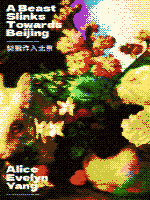
A Beast Slinks Towards Beijing | Alice Evelyn Yang
Rating: 4✶ | Date: 9 February 2026
Fav. Quote: "There will be women after this. There will be innocence after this. There will be girls who won’t know how it feels to be split by a monster crawling between your legs."
Review:
I love books that show multiple generations. A Beast Slinks Towards Beijing has such an interesting plot. It talks about the Japanese invasion of China and the Cultural Revolution and the Red Guards. It uses folklore to represent the way that trauma haunts a family.
The main character’s father comes back after he abandoned her and her mother a long time ago, and his mind no longer works how it used to (I’m not sure if it's because of dementia, or something like that, or because of his drinking). I love how Yang portrayed his relationship with his own memory. His chapters were so poignant, and the way that the narrative portrays his guilt is something I haven’t read before.
I’ve read books about the Japanese invasion of China before, and most of them touched on the aftermath. But I haven’t read a novel about the Cultural Revolution before. While I do recommend that people educate themselves, you don’t need a complex understanding of history to be able to read this book.
I can go on to sing praises for this novel, but it’s difficult to explain what occurs without spoiling it too much. The writing is beautiful, and Yang writes such a wide range of emotion wonderfully. The only real downside I have might partially be because of my own ignorance. I don’t know much about Chinese folklore, and though the book itself explains some of the metaphors, it was still difficult to follow. Me having no idea about the folklore is my own fault, I can’t force an author to dumb down their cultural book for me, but I don’t think that my confusion is entirely my own fault. It felt like Yang had so many things she wanted to tie into the narrative, that she forgot to make sure that everything had its reason within the story.
Even if I had a better understanding of Chinese folklore, I probably would have given A Beast Slinks Towards Beijing a similar rating. There are things I wished that Yang would have touched on more, and things I felt could have been left out. In the end, I didn’t feel fully satisfied with what I had read. But this novel is such a strong debut novel, I hope Yang gives us more!
Also, the covers are beautiful! Both of them! The one I used in this site is the UK one, made by Luke Bird and Cindy Luan.
My Dark Vanessa | Kate Elizabeth Russell
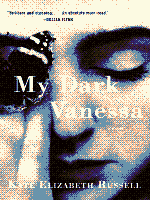
My Dark Vanessa | Kate Elizabeth Russell
Rating: 5✶ | Date: 30 November 2025 & 26 February 2026
Fav. Quote: “They’re the same, but I’m changed. I’m unhuman now. Untethered. While they walk across campus, earthbound and ordinary, I soar, trailing a maple-red comet tail.”
Review:
Before I read My Dark Vanessa, before I heard a beautiful quote from it in a YouTube video, I was convinced that I wouldn’t enjoy it. The title and the cover convinced me that it would be Tumblr-esque, something badly written for middle schoolers, maybe even a romanticization of abuse.
The book was none of this. I’ve read it twice by now, and will probably reread it again at some point. My Dark Vanessa follows a story about a fifteen-year-old Vanessa who falls in “love” with her English teacher — a man in his forties (from what I can recall). Hearing this pitch, you will be reasonably sceptical, because some stories have managed to turn this horror into a romance. Russell does not do this, even when she allows Vanessa to utter the word “love”. It is clear that, even though Vanessa does not see it, the situation is undeniably wrong. Maybe she loves her teacher, in a way a teenager can “love” an adult — I suspect it is not an actual romantic interest, but a need for the acceptance from someone you admire — but her teacher doesn’t love her. He uses her.
When you read the book, and when you pay attention, you can very clearly see that Vanessa just wants to feel accepted by an adult. She has lost her only friend, and she’s away from her parents at a boarding school, so it makes sense for her to fall in”love” with an adult who constantly praises her, who finally makes her feel understood. You can also clearly see, in the actions of the teacher, that his actions do not come from love. They come from lust.
Russell writes grooming in such a realistic way, and during my second reread I managed to notice things I hadn’t noticed prior, that’s how subtle the acts can be. She also writes emotions beautifully, vividly. You feel suspense when people begin to notice that something is wrong between Vanessa and her teacher, you feel angry when Vanessa’s school eventually fails her. You feel hope at the end of the book. All I can really say is that this book is beautiful, in all aspects.
My Dark Vanessa might even bring you into a reading slump, like it did me, since it might be difficult to find a book like it written with such nuance and skill.
March, 2026
Endling | Maria Reva
Endling | Maria Reva
Rating: 4✶ | Date: 1 March
Fav. Quote: “The future had been a luxury. The future didn’t exist anymore.”
Review:
I wanted to read Endling long before it was even released. After I read Reva’s other story Good Citizens Need Not Fear I knew that I needed to read something else by her, but Endling hadn’t yet released. As time passed, I forgot about it, I read other stories and got interested in other plots. But Reva’s name stayed in the back of my mind. And I’m glad that I did. I hadn’t even bothered to read what Endling would be about before I finally picked it up.
Endling is about Yeva, a snail scientist who lives in a mobile lab. She goes on dates with Western men for work. At work, she meets Nastia, who also dates men, and her sister Sol, who translates for Nastia. Together, they kidnap Western men who they met at a romance tour. The plan was perfect, until Russia invades Ukraine and they have to get the men to safety while their country is at war.
This story pulled you in with one single question: will they be able to bring the men to safety without getting in trouble for kidnapping? But Endling is so much more than a story about kidnapping. It talks about culture, and how Western men view Slavic women. It also talks about immigration — a character moves to Canada when he is young, and his parents want him to succeed there. By doing this they take away key parts of their Ukrainian culture and focus on integrating into Canadian society seamlessly. And yet, the character feels like he would do better in Ukraine.
Reva herself was born in Ukraine but moved to Canada. She toys with the format of Endling, gives us a perspective on how it is for her to be away from her country while a war is going on. It’s a little confusing in the beginning, the way that she toys with narrative to integrate more of her own lived experience, but once you get into it you begin to appreciate the little details she leaves behind of her own life. Many authors use their personal experiences in their books, but not many announce it within the book itself.
The end doesn’t give a clear answer to the question stated above, but the end is still satisfying. The story isn’t finished, which makes sense to me, since the war isn’t finished either. At the end, you leave the characters to continue their journey, and you hope that nothing terrible happens along the way.
Love Forms | Claire Adam
Love Forms | Claire Adam
Rating: 2✶ | Date: 6 March
Fav. Quote: "But I remember it now, that for those few moments, she and I were together. The snug warmth of her body melting into my own. The softness of her head against my cheek. We had that time together. We were given that gift."
Review:
I didn’t love this book. In my opinion, you can write a story in two ways: by describing what happened, and by making the reader feel it (usually, by placing a reading into the main character’s mind and emotions). I feel that a good book needs to be able to do both of these things. Love Forms did too much of the former, and too little of the latter. Adam did a good job at making places feel alive, but I felt disconnected from the characters and their emotions. This is a story about a woman who got pregnant when she was still a girl, which made her give the baby up for adoption.
This book was made out to be a great depiction of a mother’s love for the baby that she gave up, and I think Adam could have done more to actually show us how Dawn felt. I’m not saying there wasn’t any love, but the story could have been a bit deeper.
The way this book was written reminds me of All Our Yesterdays by Natalia Ginzburg, a book I read in early February, a book I gave a similar rating as this one. Both Love Forms and All Our Yesterdays focus more on location, and on the actions that take place within a story, rather than getting the reader immersed in the character’s mind. Both books received similar ratings, so I’m not saying that this way of writing is bad, it’s just not the kind of prose I prefer to read myself.
I also believe that Adam has a habit of overexplaining things, or more accurately, repeating information. Two examples stuck out to me the most: Suzanne is Warren’s wife, and this fact is stated repeatedly. In chapter 13, she repeats Finlay’s and Oscar’s age twice in the matter of a few pages. I feel like Adam fears that we might forget details that she deems important, and instead of looking at the words she wrote, and figuring out how she could make them more memorable — or, trying to figure out if the exact details are really that important— , she just repeats them for us.
And, finally, I'm not sure what I'm supposed to make of this line in chapter 14: "He was Indian like them, but he had knowledge, and it made them uncomfortable."
Brooklyn | Colm Tóibín
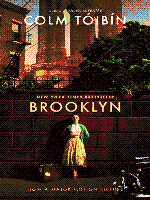
Brooklyn | Colm Tóibín
Rating: 3✶ | Date: 9 March
Fav. Quote: "She thought it was strange that the mere sensation of savouring the prospect of something could make her think for a while that it must be the prospect of home."
Review:
Brooklyn was slow, but it surprised me. For the first twenty pages or so I was convinced that I wasn’t going to like this book. It felt more like a play (not that I’m very familiar with those) than a novel. It described an action, followed by another one, followed by dialogue, followed by another action, etc.
But as I got further through the book, I warmed up to it. Not enough to give it more than 3 stars, and I’m even slightly hesitant to give it that. The plot of this book is common, a classic: a person lives in one country, then moves to another one, and they have to find their way in unfamiliar territory.
I don’t particularly enjoy this kind of story, since — once you’ve read enough of them — it’s easy to predict what is going to occur. You can forgive the nonuniqueness of these stories a little bit when they have beautiful writing that sticks with you, but many of the books I’ve read that follow this immigration storyline, including Brooklyn, don’t have that. The writing is good, but it doesn’t make up for the bland plot. There is more focus on action and location, rather than emotion. When, in my opinion, these things should lay in balance with each other. When something feels missing, I wonder if I would have been better off just reading the summary of the book, and picking up another one that promises me something more outstanding.
By unique I don’t mean that it has to be the first of its kind. People have been coming up with stories since basically the beginning of time, so it’s hard to come up with things that nobody has thought of before. This isn’t what I’m expecting. All I want is that the author offers me something that is theirs, something that is worth buying and reading. I’m not difficult to please in this aspect. When I finish a book, I just don’t want to think all of these things happened, but it led me nowhere, it led the character nowhere, why did I pick up this book?
The fact that people have been writing for so long, has made it difficult for readers. There are so many novels out there for us to read, and we can’t read all of them in our lifetimes, so we have to be picky. When I read a book about immigration, for any reason, I want the character to make decisions, I don’t just want them to go through life without any autonomy.
Bitter Sweet | Hattie Williams
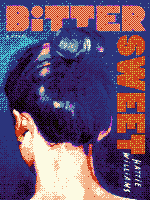
Bitter Sweet | Hattie Williams
Rating: 2✶ | Date: 16 March
Fav. Quote: “For me it felt the opposite, like I was intruding in the world, always waiting to be identified as an imposter and dragged off to where I really belonged.”
Review:
I’m on edge about giving this two stars, but one star feels just a tad bit too harsh. The problem with this book is that it feels like Willaims didn’t quite care for it. There were multiple times that I had to re-read a sentence multiple times just because it was written sloppily. Sometimes it even felt like words were missing. Like in these instances:
“How he might greet my dad, to whom was so close in age.” → “to whom he was so close in age.”
“...but his celebrity meant that they felt some ownership over him,...” → “...but his celebrity status meant that they felt some ownership over him,...”
“All of the houses were quiet and their blue shutters tightly closed to keep the heat out, Ophelia explained.” → “All of the houses were quiet and their blue shutters were tightly closed to keep the heat out, Ophelia explained.”
It just felt like Williams kept forgetting to put some words in, making certain sentences unnatural at best and grammatically incorrect at worst.
The plot wasn’t really the best, either. It was quite boring, a bit unoriginal, and drawn out. The main character went through a traumatic experience in her teenage years, and she mentions it to another character once, and then it remains unmentioned for a long time until she begins seeing a doctor/therapist (I’m writing this review a bit after reading, so I can’t remember exactly). Her mother also died, and I do think Williams wrote her grief very well. I also lost one of my parents when I was a teenager, and I could relate to some of the main character’s thoughts.
I feel like I would have liked this novel more if the writing was better, and if it was way shorter.
April, 2026
The Red Tent | Anita Diamant
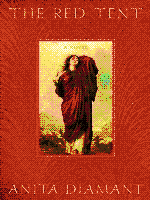
The Red Tent | Anita Diamant
Rating: 3✶ | Date: 13 April
Fav. Quote: “My mother, too, lost a child, who came from the womb months too soon. The women looked away from the tiny doomed girl, but I saw only her perfect beauty. Her eyelids were veined like a butterfly’s wing, her toes curled like the petals of a flower."
Review:
The Red Tent is a (re)telling of Dinah’s story within the book of Genesis. She’s the daughter of Jacob and Leah, sister of many brothers. Her story doesn’t have a lot of detail, and her ending isn’t given. In the Bible.
I’m not a Christian myself, and the Bible wasn’t a book we read in my home, so I have not read the original text myself. Nor do I know whether or not The Red Tent is an accurate retelling of the story and the time and place in which it was meant to be set. So this review won’t be about accuracy.
I think this book is easy to read, even when you’re nonreligious like me and have never touched a Bible. All the information is given in the book, you do not have to know the story of Dinah before reading.
The plot is interesting as well, but it isn’t exactly my kind of book. In my review of Brooklyn by Colm Tóibín I have mentioned that I don’t like stories in which characters don’t take a lot of initiative, in which they allow the story to pass over them without making much choice themselves. In The Red Tent I can partially forgive this, since the story does feel a bit more unique than Brooklyn’s. It isn’t something I have read before. Diamant also has to stay within the confines of the original work. Someone who has read the Bible should be able to recognize the original within the retelling. But because Dinah’s story is seemingly so lacking in detail, I feel like Diamant could have done a little more with the plot.
The writing is quite beautiful. There are many characters in the book, and Diamant manages to make the main ones feel separate and memorable. I don’t think I can find many flaws in the writing, though it is a bit barebones sometimes. The story also moves slowly.
There were parts I couldn’t understand fully, but they weren’t essential to the story.
Oranges Are Not the Only Fruit | Jeanette Winterson
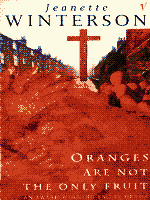
Oranges Are Not the Only Fruit | Jeanette Winterson
Rating: 2.5✶ | Date: 15 April
Fav. Quote: “I have not gone forward or back in time, but across in time, to something I might have been, playing itself out.”
Review:
This book has finally managed to convince me to allow half-star ratings. Which I had been reluctant to do at first, since it makes my personal tracker a bit more complicated. But it didn’t feel right to give it two stars, nor could I settle for three. So a 2-and-a-half it is.
I feel like, lately, I’ve been picking up books that just weren’t written for me. So if you feel like my reviews have been negative, I want to say that I do have books that I absolutely adore, but many of the novels that have plots that I enjoy simply have writing styles that I don’t — so I’m left with either not reading it, and missing on a great story, or reading it and coming over as if I never have anything good to say. I always try to find a balance while I’m writing reviews — I want to bring up things I enjoyed and things I didn’t.
So let’s start with the good. For some reason, I particularly enjoy stories set in the North of England — it reminds me a lot of my home city a little bit. Most of the stories I’ve read set in the North, come from people who came from the North, which means the book is written with a warmth one can only feel for their own culture.
I like how Oranges Are Not the Only Fruit talks about religious obsession, and how it criticizes it. The main character is a lesbian who leaves the church, and how the church reacts to this. This aspect, from what I can tell, also came from Winterson’s own experiences.
The writing style was alright, the words felt very bareboned. The plot leaves much to be desired, though. It was hard to tell how the time passed. The side characters, in a way, felt more thought-out than the main character. Winterson described Oranges Are Not the Only Fruit as experimental, and I can see that with how she added shorter stories — tales, sort of — to the larger text, all of them trying to convey a message about what is occurring in the novel. I liked this, since they didn’t feel too on the nose.
Overall, I just wish the story and the writing style were a little more fleshed out. But other than that, Oranges Are Not the Only Fruit was perfectly enjoyable. I also liked how, in the beginning, the main character’s mother told her that oranges are the only fruit, and in the end the mother says that oranges aren’t the only fruit. I don’t think her mother supports her fully, but it does seem like she has opened her heart up a little bit.
Half of a Yellow Sun | Chimamanda Ngozi Adichie
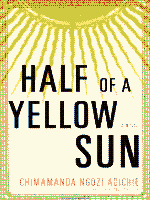
Half of a Yellow Sun | Chimamanda Ngozi Adichie
Rating: 4.5✶ | Date: 20 April
Fav. Quote: “He wanted to clean. He wanted to scrub furiously. He feared, though, that it would change nothing. Perhaps the house was stained to its very foundation and that smell of something long dead and dried would always cling to the rooms and the rustle of rats would always come from the ceiling.”
Half of a Yellow Sun is written about the Republic of Biafra, which existed independently from Nigeria from 1967 to 1970, and the Nigeria-Biafra War.
I’ve read a book by Chimamanda Ngozi Adichie before (Purple Hibiscus), so I knew that I would like her writing, and I already kind of knew what to expect when I got into this one. And yet I feel like she has exceeded my expectations.
Biafra mainly existed because of the amount of violence Igbo people received in Nigeria. Adichie grew up in an Igbo family herself, and I’ve already said it in my review of Oranges Are Not the Only Fruit, but I love it when people write about their own culture, and the history of their culture. It’s a whole different thing to read it from someone who is personally connected to the people, than to read it from someone who might have great knowledge about it, but who is not part of the group themself.
One thing I think Adichie did great with Half of A Yellow Sun was that she showed the perspectives of multiple different people, who all fall into different places in society: Ugwu is a houseboy, Olanna is a woman educated in London with well-off parents, Richard is a white man from England, who has fallen in love with Olanna’s twin sister. With this, Adichie was able to show how different people get treated in the same country, and how unfair it can be.
The writing was vivid and beautiful. This is a deeply historical novel, but it’s very easy to understand the events and why they occurred, without the topic being dumbed down significantly.
I do have some opinions, mainly about Ugwu’s point of view. The novel starts when he’s thirteen, when he begins his life as a houseboy for Olanna’s husband Odenigbo. I have conflicting feelings about his chapters. I think they’re important to be included, to show the perspective of a young boy who isn’t as well off (well, he’s better off because of his status as Odenigbo’s houseboy, but he doesn’t come from a rich family), but I feel like at some point it was very easy to guess where his story was going. There was a short plot twist, but in the next chapter we were given a piece of information that once again revealed where his story would go. So, even though I enjoyed his perspective, I wonder if there was a way to include it that didn’t pad up the story (for the lack of a better term). I also think some people won’t like his character, since he had some perverted thoughts. I myself became a tad uncomfortable at points, but I do think I understand why Adichie included them.
Richard is also an interesting character. He is very much a person who believes he is not racist, but when a white woman he knows expresses racist beliefs, he does not speak up against her. Also, when a Nigerian professor (from what I can remember) tells him he might be showing some prejudice, when Richard expresses surprise at Igbo-Ukwu art (which he’s very interested in), he immediately becomes defensive instead of listening and opening himself up to a meaningful conversation.
I think Richard as a character is someone who is unaware of his own privilege, to an extent, and also someone who wants to be a part of something. He calls himself Biafran, just because he was there when Biafra became independent, as if that was the only requirement, as if Biafra as a concept didn’t exist in people’s minds long before it finally came to be. I’m pretty sure it was Kainene, Olanna’s twin sister, who pointed out that if he wanted, he could easily get out of the warzone with help since he was a foreigner. Kainene, her sister, and nearly every other person in Biafra didn’t have this privilege, and Richard seemed to be unable to recognize this fully.
To be fair, Richard spoke Igbo and lived in Biafra for about a decade, and he wanted to marry Kainene (though he never even proposed). I can kind of understand how it might feel to be seen as a foreigner when you personally feel very connected to the culture, but I don’t think you can force the people who were born into that culture, who carry generations of people within that culture behind them, to accept it. Especially not when the people in that culture are being oppressed and massacred, something Richard won’t be able to understand as a white man (not to mention, of course, Britain's colonialism and the hand it played in the oppression of Igbo people).
Generally, I think that Half of a Yellow Sun was a gorgeous book to read. I mentioned the length, but it didn’t feel too long, my main complaint was just that the plot was easy to guess in some places, so some parts felt like you were being (for the lack of a better word) edged when you just knew what was going to happen. I liked how the ending was bittersweet. It showed clearly that the end of the war isn’t the end of suffering and pain and crime. This is shown in Kainene’s ending. She went on a trip to get food, and she never came back. We never got the explanation of what happened to her — which is such a common thing to happen during times of conflict. So many people lost loved ones without ever finding out what happened.
I definitely recommend this book, and Purple Hibiscus as well.
p.s.: While looking for the book cover, It's come to my attention that it's a movie as well, released in 2013. I might watch it if I can find it!Heap Earth Upon It | Chloe Michelle Howarth
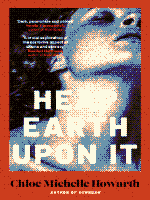
Heap Earth Upon It | Chloe Michelle Howarth
Rating: 2✶ | Date: 25 April
Fav. Quote: “Heaven was the pink of your best dress, and your knuckles on my door. Heaven was butter melting into bread made by your hands and laughter from your mouth. I knew Heaven every day, every time you looked at me. Maybe we don’t go there when we die, maybe we live there while we are alive.”
I was ready to enjoy this book. Since I liked Sunburn quite a lot when I read it. But unfortunately, Heap Earth Upon It wasn’t enjoyable. It felt like a drag to read for the first half or so, though after that the writing style did read better and it became more captivating.
I wished that this book was all it could have been. It talked of obsession, and a strive for the perfect image, and it talked about sibling relationships and friendships. Anna, the eldest sister, falls in love with someone in their village, and she becomes absolutely obsessed with her. Every sibling is captured with grief for Jack’s — the youngest brother — girlfriend, who was pregnant with his baby. There’s more grief, as well, but I feel like revealing this would reveal too much of the story. Jack’s girlfriend, Lillian, is a primary part of the story, though she is never alive within it. This was a concept I liked.
I also liked how it wrote about the grief, obsession, and the need to make one’s family appear perfect. And that’s about it, truly. The plot had a twist in it, and it wasn’t that I couldn’t believe that it actually happened, but it felt underdeveloped to me, revealed in the last few pages. I feel like Howarth tried to portray so much, which made everything feel like a muddled, unfinished “mess”. I wished she had narrowed things down a little.
May, 2026
Het Gouden Ei | Tim Krabbé
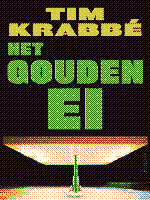
Het Gouden Ei | Tim Krabbé
Rating: 1.5✶ | Date: 6 May
Fav. Quote: “Maar weet je wat het ergste is? Het niet weten. Met twee blikjes voor de deur en tjoep, weg. Alsof iemand vond dat haar atomen maar niet meer bij elkaar moesten horen. Haar kwijt zijn is iets redelijks, maar dat niet weten niet. Dat is onverdraaglijk. Je kan daar van die gedachtenspelletjes over doen. Dan krijg ik bij voorbeeld te horen dat ze ergens leeft, ze is heel gelukkig en zo. En dan mag ik kiezen: ze blijft zo doorleven, of ik zal alles te weten komen, in ruil voor haar dood. Dan laat ik haar dood gaan.”
Translation by Claire Nicolas White: “But do you know what the worst thing is? It’s not knowing. Standing by that door with two sodas, and zip, gone! As if someone had decided that her atoms didn’t belong together anymore. To have lost her makes sense, but not this not knowing. That is unbearable. You can play all kinds of mind games. For instance, I am told that she is alive somewhere and perfectly happy. And I’m given a choice: She goes on living like that, or I get to know everything and she dies. Then I let her die.”This story was less than a hundred pages. So it makes sense that it didn’t really have any impact on me. I was inspired to read this because of the quote stated above, and honestly that’s the only part of the story that stood out to me.
I don’t read many short books. But I think it’s possible to make a person feel connected to the characters in a story that’s as short as this, but Krabbé failed to do it. Everything about Het Gouden Ei was mediocre to me.
I read the book in Dutch. The English version is called The Vanishing. There’s also two movie adaptations – Spoorloos (basically means without a trace), which is the Dutch version made in 1988 directed by George Sluizer. And The Vanishing, which is an English remake also directed by Sluizer.
p.s.: Het Gouden Ei means The Golden Egg! It was published in English as The Vanishing in the same year the English remake was released (1993) with the same title, so maybe the wildly different title has something to do with that?
The Last Green Valley | Mark T. Sullivan
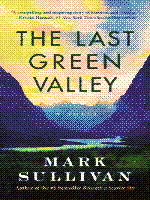
The Last Green Valley | Mark T. Sullivan
Rating: 2.5✶ | Date: 14 May
Plot
The plot of this book gave me complicated feelings. It talks about ethnic Germans in Ukraine, and follows the true story of the Martel family, who escaped with the help of Nazis.
At that time, ethnic Germans were sent to labour camps by Stalin’s government, because they were also seen as responsible for the crimes by the Nazis. In this story, the Martels aren’t Nazis. Emil Martel refused to murder three Jewish people and only agreed when a gun was put to his head. Though he eventually did not have to murder them, because of an order of Himmler’s. They only follow because they don’t want to be punished for crimes they did not commit, which is understandable.
I’m not entirely sure where my complicated feelings come from, perhaps because I have some missing context regarding the history? I don’t think the Martels should have been punished and forced from their home because of their lineage, if they truly did not commit crime or belief in the Nazi ideology. But how could people be sure of their disbelief in the ideology? Of course, if you’re going to be punished for being a Nazi, you aren’t going to admit to being a Nazi. This isn’t to say that I do not believe the Martels, this is more of a general statement. It is difficult to know what to do with Black Sea Germans when it’s difficult to prove whether or not they are aligned with the Nazis or not. Especially when there is evidence that there were indeed Black Sea Germans who had a hand in crimes towards Jewish people, some under coercion, others willingly. But I do think that there must have been a better option than collective responsibility.
I do believe that Sullivan had good intentions writing about this. I think I would have given this book a worse rating if he hadn’t mentioned the Black Sea Germans who willingly followed Nazi ideology. But he did mention that and he didn’t try to paint every Black Sea German as innocent just because the Martels were, which is good. Though reading the book I still can’t understand whether a belief in Nazi ideology was popular with Black Sea Germans or not, which I think was a bit of an undersight.
Another thing I didn’t like was that the Soviet Army was portrayed almost just as bad as the German one. Do I also believe that the Martels struggled greatly under Stalin? I do. But I don’t think this was the way to go. The Soviets were important for the defeat of Nazi Germany, and Sullivan could have highlighted the horrors of life in the Soviet Union for both Black Sea Germans and Soviets alike, and the unfairness of collective punishment, without blatantly ignoring this fact.
All in all, I think the book was sort of too long (part of this has to do with the style, which I’ll talk about later). I kid you not, two pages focused on whether or not a kid should pee in a bottle or not! A lot of information gets repeated without much added insight. I don’t really determine whether or not a book is long by just the page count, but also by whether or not the journey felt worth it, whether or not it felt rewarding to reach the end and finally see the result of the character’s decisions and work throughout the book. In the end, I didn’t really feel rewarded at all. I feel like if the last few chapters were added in differently, and shorter, it would have ended better. It would have been an open ending, sort of, with the Martel family arriving in America, but it would have been hopeful and more rewarding than reading more chapters that felt like wikipedia summaries of the rest of their lives.
Writing
I’m not sure what it was about this book, but the writing style did not match with me at all. Even though I feel like I’ve read books with a writing style similar to this one’s and enjoyed it. Perhaps it felt a bit too distant? Some points made me think this is the kind of book someone’s (and my) mom would read. It has this sort of vibe that might attract people who might also enjoy biographies of millennials who bettered their life by living, laughing and loving. But that might just be me.
I’m not sure where to put this, but it also felt a bit preacher-y. Take this, for example (Universal Intelligence = God): “You are asking if I know the intent of the Universal Intelligence, and I do not. But maybe the millions in Ukraine died so people like you would run like a nomad when you got the chance to make a new life in the West. Maybe so many Jews died so the ones who survived would become the toughest, strongest people on the face of the earth, people who would help make sure there were no more death camps or starvation. Ever.”
Emil lost his faith in God after he was nearly made to murder the three Jewish people. The quote is something Corporal Gheorghe tells him. Basically his point was this: God did listen, because Emil asked Him not to make him a murderer, and he didn’t have to murder the innocent Jewish people because Heimlich Himmler made the decision not to force people to kill the Jewish. And when Emil, logically, asked why God didn’t also listen to the innocent people who begged not to die, Gheorge made that point. I don’t think I have to point out why the logic is flawed, and messed up, but Emil only vaguely disagrees with it (or challenges it weakly) before running with basically everything Corporal Gheorge said. Suddenly, his faith was restored!
Characters
There’s not much that I can say about the characters. They felt flat, and they didn’t go through much development at all.
Purple Lotus | Veena Rao
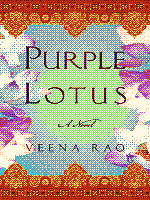
Purple Lotus | Veena Rao
Rating: 3.5✶ | Date: 27 May
Fav. Quote: “She put her hand over her chest, felt the rhythm of her heart. It was a beat she had known for thirty-one years, and yet, she felt, it was yet to assume meaning.”
I generally liked this book, but I don’t think it will stick with me in the way that I thought it would when I started it. The beginning was very strong, but the writing and the characters kind of fell off for me throughout the story.
I don’t have any complaints regarding the plot itself. It moved quite fast, and it wasn’t the most unique or anything, but by the end of the book I didn’t feel like I wasted my time reading it. It was just the writing that bothered me. It felt distant and flat, like we didn’t often get a full train of thought from the main character even when she made important decisions in her life. Not that she never had a thought process regarding a decision, but it wasn’t always there in the way you’d expect it.
Purple Lotus talks about the expectations put on women, mainly surrounding marriage, in a traditional community. It also largely touches upon the main character, Tara, being left behind with her grandparents and uncle when her parents and younger brother go to Dubai. This was of course a thing that really shaped her, but I don’t feel like Rao could have done a bit more with it in the end.
All in all, it was an alright read, I just wished it hadn’t felt as distant.
June, 2026
Birth Canal | Dias Novita Wuri
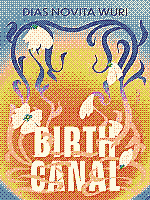
Birth Canal | Dias Novita Wuri
Rating: 3✶ | Date: 1 June | Time: 2h 58m
Fav. Quote: “‘In the end, she was desperate for God’s forgiveness, but I reckon it’s God who should ask forgiveness from her.’”
It’s difficult to talk about what this book is about. It has four different stories, all are connected in some way.
In the first story, an unnamed man talks about his female friend Nastiti, who left everyone behind.
In the second story, Arini talks about a researcher in the Netherlands about her mother Rukimi, an Indo-Dutch girl who was forced into prostitution by the Japanese army.
In the third story, an ex war photographer recounts the fact that he once raped a woman, Hanako, who was married to an ex imperial soldier.
In the fourth story, Dara wishes to conceive and becomes obsessed with a Japanese porn star who plans to kill herself.
The thing is, all stories were in some way confusing to me. Some more than others. I understood the second story fully without much problem, but the rest left me with much confusion. This might be because the story seemed to have been translated into English, but it was difficult to completely understand who the characters were referring to, and via which character we were seeing the story. Some stories have multiple POVs and don’t follow a perfectly chronological timeline, and this seemed to have been the cause of my confusion. I don’t want to blame this author, since it very much could be my fault — the story is definitely experimental, so there’s always going to be someone who doesn’t understand, even if most other people do. But all in all, it wasn’t the best reading experience for me.
But, when I did understand what was going on, I loved Wuri’s writing and how raw her stories were. Every character was unique in their own way, their emotions were portrayed beautifully.
Writers & Lovers | Lily King
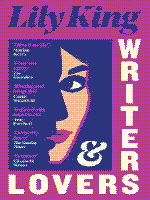
Writers & Lovers | Lily King
Rating: 5✶ | Date: 3 June | Time: 4h 32m
Fav. Quote: “I try to write something new. It’s bad and I stop after a few sentences. Even though I didn’t feel it at the time, I got into a rhythm with the old novel. I knew those characters and how to write them. I heard their voices and I saw their gestures and anything else feels fake and stiff. I ache for them, people I also once felt were stiff and fake, but who now seem like the only people I could ever write about. ”
This book was what I was searching for for such a long time. While rating all kinds of books — ones far away from five stars, once very close to it, this is what I had in mind for the “perfect” 5-star read.
There’s something very old about it, in a way. The style reminds me of Eve Babitz’s Slow Days, Fast Company: The World, the Flesh, and L.A., a book that I also rated highly. I’m not sure if these two books are actually alike in any way (and here I’m speaking about the writing style only) but Writers & Lovers just reminds me of a book written before the 2000s. King has such a gorgeous way with words, and I just cannot properly explain what I loved so much about her book. Everything was spectacular to me. It felt real in a very relatable way, and near the end I actually started tearing up even though the ending wasn’t really sad at all. It felt like the time I spent with this book, with the main character Casey, was time well spent, was time learning about both her and myself.
This is the kind of book where the character is a bit more important than the plot (though of course the plot has a lot to do with the character). It mainly follows Casey, a waitress whose mother suddenly died while on a vacation with friends (Casey wasn’t with her when she died). Casey hasn’t had successful relationships, and neither has she had much success with her currently in-process novel. But then suddenly, she’s stuck between choosing for Oscar Kolton, a man over a decade her senior with who is a single parent to his two sons who she quickly begins adoring, and Silas, someone her age, a high school teacher, but who went on a sudden trip away on the day of their first date. Both of them are writers.
Casey goes through a lot during the novel, but everything ends up going well with her book, and she finds a new career as an English teacher. She also managed to pick between Oscar and Silas. But it shows the struggle she went through to get to that point in her life, things didn’t happen unrealistically. I think what I liked so much was to see someone who was kind of like me, though older, Casey was stuck in life, grieving her mother, working a job she didn’t like and feeling generally stuck in life. It showed the struggles of writing beautifully, but also showed that things can get better.
The grief was portrayed in such a raw way as well. In August, two years will have passed since my father’s sudden death from lung cancer. I was fifteen when he died, and luckily I did get to say goodbye. But he had died less than a week since his diagnosis — before he passed, they weren’t even sure where the cancer had started, they were still waiting for test results — and I only got to visit him three times in the hospital — once when he got diagnosed, then the day after, and then on his last day. I said goodbye, but I hadn’t been given enough time to make sure that that goodbye would be full and satisfying for me in the long run. I related to Casey so much — after something good happened, she wanted to tell her mother (“I put my key in the lock. I’m in the mood to call my mother, that happy, shift in the wind mood. I calculate the time in Phoenix. Nearly noon. Perfect. The bolt retracts, and I remember she died”). It reminded me of my first day at the lab in school, when I just wanted to go to my papa’s — who used to work in a lab himself — house over the weekend and tell him everything I learned about lab safety and lab notebooks.
Writers & Lovers was just a great read about feeling stuck in life and managing, after a long and painful process — to get unstuck.